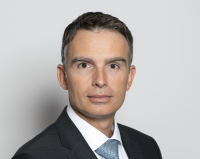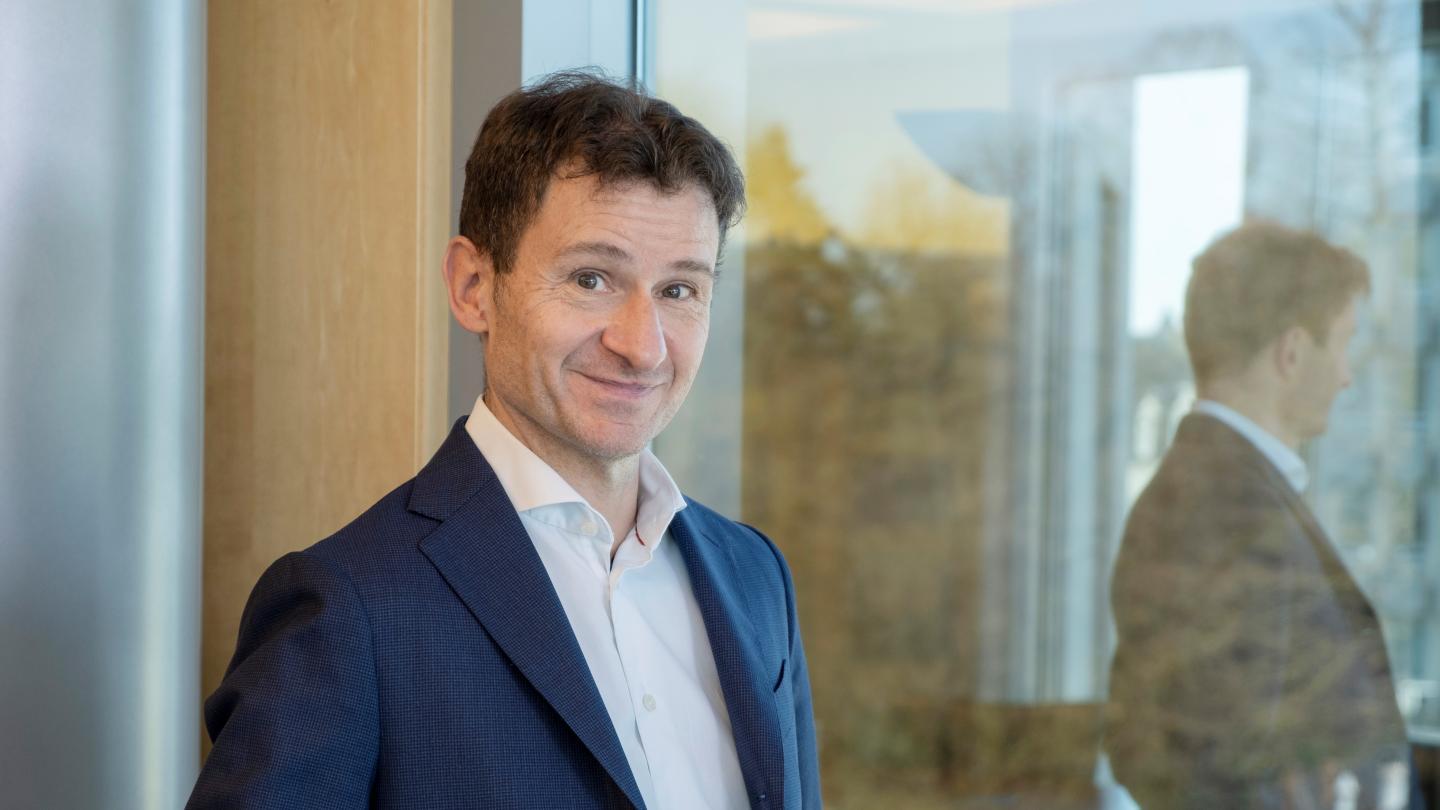
After 40 years at Banque de Luxembourg, Guy Wagner is retiring. However, he doesn’t plan to sit on his hands. In an interview with Investment Officer, the outgoing chief investment officer reflected on his career, the evolution of financial markets and his favorite book on Warren Buffett.
The word retirement sounds “a little bit strange” to Wagner. What does he plan to do: go Base jumping, travel to a dream destination, learn a new skill?
“Everybody seems to have a bucket list. I don’t!” said Wagner. “I like Asia. I like Japan, and I’ve been to Japan a few times. If I could go there a few more times, I would like that. But I don’t really have a bucket list.”
He does expect to stay active. “I intend to set up a small advisory boutique, which will give strategic advice.”
His four-decade career has given him a unique perspective on how the financial sector, in Luxembourg and beyond, has developed.
A new era for financial markets
After obtaining a degree in economics from the Université Libre de Bruxelles, Wagner joined Banque de Luxembourg in 1986. “I didn’t know what to do, but then I got this possibility to start at the bank,” he said. “I did a one-year traineeship, and the idea was to build up the financial analysis department. I said, ‘Why not? Let’s see.’”
And he stayed. He eventually became responsible for the financial analysis and asset management departments, and was then named managing director of the newly created asset management firm Banque de Luxembourg Investments in 2005. Wagner took on the role of BLI’s chief investment officer in 2022. “It’s usually what older people say, but time went by so quickly!”
Wagner said that when he started in the business, financial markets were not as present as they are today. “There was no CNBC. Hardly anybody knew there was something called the Dow Jones.” That started to change in the 1980s. “Over the past 40 years, financial markets, and the financial sector in general, have grown enormously in most regions. Now the stock market is basically everywhere. You can hardly not notice what it is doing, and this encourages very different behavior for most investors.”
Most of this information, said Wagner, “is basically just noise.” Still, “it influences what people are doing.”
One of the major trends he has observed is a shift toward buying stocks with a speculative, short-term mindset rather than what the American investor Warren Buffett called “business-like investing”: buying shares as a long-term participation in a company.
“Now, you basically buy a piece of paper, see if it goes up or down a bit, and react accordingly,” he said. “To a certain degree, this makes the whole thing much more fragile.”
Most stressful experience
The most stressful challenge that Wagner faced, and one that highlights the fragility of the financial sector, was the 2008 financial crisis. Having started his career in 1986, he had a front-row seat to the 1987 stock market crash, when the Dow Jones and S&P500 both dropped more than 20 percent in a day. It was an eye-opening experience, and a grounding reminder later in his career.
“People were very worried because it was the first real crash since 1929, which had led to a worldwide depression,” he said, explaining that things quickly got back on track. The Asian crisis in 1997 had a regional rather than a global impact, while the dot-com bubble in the early 2000s was limited to a few sectors. “It led to a very shallow recession, but nothing dramatic.”
“2008 was really a crisis where there was a potential that the financial system would implode,” said Wagner. “That was very worrying. Central banks intervened, and we had quantitative easing, and so on. But that was really a very dramatic moment.”
Since then the pattern has repeated itself. “As soon as markets go down, the authorities panic. They intervene, they inject liquidity, and the market goes up again. We’ve seen this play out many times,” said Wagner, adding that particularly in the US this intervention illustrates that “the stock market has become so central to the economy that the authorities don’t want it to go down.”
In hindsight, Wagner believes quantitative easing and other measures were necessary to address the 2008 crisis, “but they lasted much too long.” The crisis revealed a financial system prone to fragility. “We’ve basically been in an environment where the excesses have never really been cleared out of the system. Quite the contrary, they have increased.”
While the financial crisis served as a warning, the financial sector’s share of the GDP of most countries has continued to grow, Wagner said, voicing concern over its disproportionate size. However, he added, “I think that we’re beginning, now, to see a trend where [the financial sector’s importance] might decline again.”
Right place, right time
Looking back at his career, Wagner said he was in the “right place at the right time.” “From 1966 to 1982, it was not a very pleasant moment to work in financial markets: the stock market went down, interest rates went up, bond markets went down too,” he said. But in 1982, US Federal Reserve chairman Paul Volcker increased interest rates to tackle inflation. That was the start of a 40-year bull market.
“I started in ‘86, more or less four years after the beginning of that bull market,” Wagner said. “If you have a lot of tailwinds, it’s better than if you have a lot of headwinds. I was lucky to have that.” Globalization in the 1990s, he said, “was very good for companies because it allowed them to increase their profit margins. Now, I wouldn’t say that globalization is over, but clearly, from a geopolitical point of view, it’s a very different situation.”
Over his career, he’s seen two major technological revolutions: the internet and, now, artificial intelligence. “From a stock-picking point of view, technology clearly remains very important.”
Warren Buffett philosophy
When Wagner started his career and set up the financial analysis department, he asked himself what made sense for a relatively small bank, essentially doing private banking. The answer lay in Warren Buffett’s approach: buying a stock means taking a long-term stake in the company.
“I’m incapable of short-term trading,” he said. “I don’t have any special affinity for it. This idea of investing in quality businesses with a long-term approach made a lot of sense for the bank and its clients.” His role is to make sure that it’s a good company. “It’s a bit like a marriage. We have to make sure that it’s the right partner,” said Wagner.
Buffett came up a few times during the interview. Although Wagner has never met or spoken with the investment guru, he attended the annual Berkshire Hathaway shareholder meeting twice. He also spent a lot of time reading his letters. Wagner pointed to a compilation by Lawrence Cunningham called “The Essays of Warren Buffett” as a particular favorite.
“It’s important to have the right mentors,” Wagner said when asked what advice he would give himself at the start of his career. “Through his way of investing, [Buffett] was kind of a mentor. Then I had the former CEO of the bank, who was clearly a mentor.”
However, he concluded, “You have to make up your own opinions. Cross-check them from time to time, but then try to stick to your approach.”